Augusta Precious Metals Free Gold IRA Kit: What’s Inside
TL;DR: The free Augusta Precious Metals gold IRA kit is a no-cost, no-obligation educational guide paired with a one-on-one web conference led by Devlyn Steele, the Director of Education. The guide explains self-directed IRA basics, the coins and bars that qualify under IRC 408(m)(3), and how a rollover works. The guide and the roughly 60-to-90-minute conference are both free, with no purchase required. The minimum to open an account is $50,000.
| The Kit at a Glance | What you get |
| **Free guide** | Educational gold IRA guide, requested by web or phone |
| **Web conference** | One-on-one session, roughly 60 to 90 minutes |
| **Led by** | Devlyn Steele, Director of Education |
| **Cost** | Free, with no obligation to open an account |
| **Account minimum** | $50,000 to open a precious-metals IRA |
What Is the Free Augusta Gold IRA Kit?
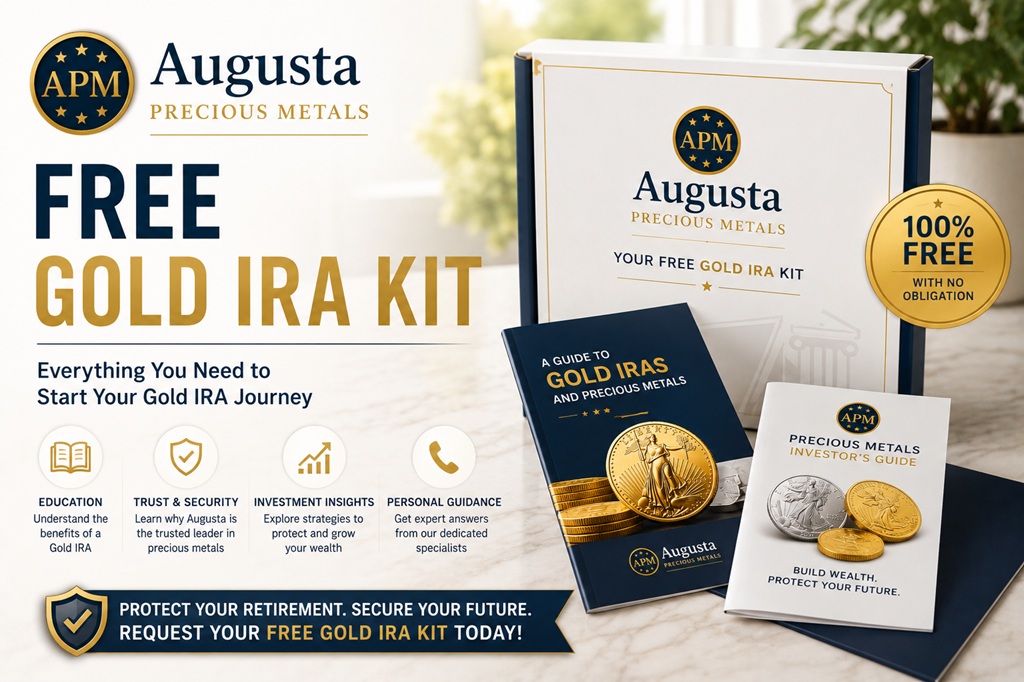
The free Augusta gold IRA kit is a no-cost, no-obligation educational guide that walks a prospective customer through the basics before any sales conversation. A request takes a minute by web or phone, the materials arrive at no charge, and nothing about asking for them commits you to a next step. It's the education-first entry point to the company's process.
The material inside is organized around the decisions a first-time saver actually faces. What sets a self-directed account apart from an ordinary one. Which coins and bars the law actually permits inside it, and why most products on the market fall outside that line. What the account can and cannot hold once it's open. Each topic reads as a question to answer rather than a feature to sell.
Those eligibility rules come straight from the tax code. The carve-out at IRC § 408(m)(3) separates specific gold, silver, platinum, and palladium coins and bullion from the general collectibles prohibition that otherwise applies to retirement accounts. The same rule requires the metal to be held by an IRS-approved trustee rather than at home, which is a detail the guide explains so readers don't fall for home-storage marketing.
Rollover mechanics get their own plain-English treatment, because that step trips up a lot of first-time savers. The guide explains that moving funds straight from one retirement account to another avoids a tax event, that a transfer between custodians is the cleaner path, and that the timing rules matter once cash actually leaves an old account. A reader who understands that distinction before any paperwork starts is far less likely to trigger an avoidable tax bill.
The kit also puts the current numbers in front of you. For tax year 2026 the Internal Revenue Service set the IRA contribution limit at $7,500, with a $1,100 catch-up for savers age 50 and older that brings the total to $8,600. Those figures matter when you're deciding how a precious-metals position fits alongside the rest of your retirement plan.
Why start with a guide instead of a price quote? Because the company treats a retirement decision as too important to rush. There's no cost at this stage and no scheduled follow-up pressure. You read the materials at your own pace and decide whether the next step makes sense. If you want the full mechanics of opening an account, our explainer on how a gold IRA works covers the structure in depth.
The kit is the same regardless of how much you plan to invest. A reader who decides a gold IRA isn't the right fit can stop after the guide with no further contact required.
How Do You Request Your Free Augusta Gold IRA Guide?
You request the guide on Augusta's website or by phone, and it costs nothing. There's no obligation attached, no purchase required, and no commitment to schedule anything afterward. The request is the first step in an education-first sequence, not a trigger for a sales pitch.
The process is short. You provide a name and basic contact details, and Augusta sends the materials. From there the company invites you to the next education step, the one-on-one web conference, but you decide whether and when to take it. Nothing about the request locks you into a purchase path.
What happens after you ask for the guide? Less than most people expect. Augusta's representatives earn salaries rather than commissions, which removes the per-transaction incentive that drives the high-pressure follow-up calls common elsewhere in the category. The company separates its education function from its sales function on purpose, so the first few contacts stay informational.
A salaried team also changes the tempo. There is no quota pushing a representative to convert you this week, so the follow-up tends to be a question about whether you've read the guide rather than a push to buy. A saver can take a week, read the materials twice, and come back with a list of questions, and nothing about that pace works against the company.
That structure is the point worth noticing. A salaried education team has no reason to rush you toward a same-day decision, because nobody's paycheck moves when you say yes. You get time to read, to write down questions, and to compare what you're learning against your own plan.
The guide is genuinely the starting line, not a hidden order form. You can request it, read it, and walk away. Always consult your own legal, financial, and tax professionals before acting on anything you read in a gold IRA guide, including this one.
What Happens During Augusta's One-on-One Web Conference?
The web conference is a free, one-on-one session that typically runs 60 to 90 minutes and is led by Augusta's Director of Education. It's informational rather than a closing presentation, and it remains free with no obligation to open an account. Nothing about it works like a closing pitch. It sits ahead of any account decision so a saver reaches the money questions already understanding how the structure fits together.
The session covers a defined curriculum. It walks through economic fundamentals, how a gold IRA actually works, the IRS rules that govern self-directed retirement accounts, and the common industry tactics a careful buyer should learn to spot. You can book the one-on-one web conference after you've reviewed the guide, and Augusta routes prospective customers through this step before any account opens.
The economic portion sets the context. A session walks through why savers diversify, how gold has behaved during past periods of market stress, and where a precious-metals position fits alongside stocks and bonds. From there the conversation turns to mechanics, the difference between a transfer and a rollover, the role of the custodian, and the reason metals must sit with an approved trustee. In the end, a prepared saver understands the structure well enough to ask sharp questions.
Why does the format matter? Because a one-on-one setting lets you ask the questions that actually apply to your situation. A retiree weighing a 401(k) rollover has different concerns than a saver still ten years from retirement, and a live session can follow those threads in a way a printed guide can't. A saver who has sat through the session tends to return with sharper, more specific questions than they walked in with.
The session is also where the rules get concrete. The eligibility carve-out at IRC § 408(m)(3), the difference between a transfer and a rollover, and the reason metals have to sit with an approved trustee instead of in a home safe all get explained in plain language. That grounding is what separates an informed decision from a rushed one.
No purchase call is scheduled at the end by default. Augusta leaves the next move to you, and the learning carries no charge whether or not an account ever opens. A saver who finishes the session and decides a gold IRA isn't right for them owes nothing and has lost only the time it took to learn.
Who Is Devlyn Steele, and Why Does He Lead the Conference?
Devlyn Steele is Augusta's Director of Education and on-staff economic analyst, and he leads the web conference himself. Augusta describes him as a member of Harvard Business School's business analytics program. That program is a non-degree executive analytics program rather than a Harvard degree path, a distinction worth stating plainly so the credential isn't oversold.
Steele's background is in markets rather than sales. He began his career in 1983 as a financial analyst and has worked across finance, technology, and venture capital in the decades since. That experience is the reason Augusta puts him at the front of the education process instead of a commissioned representative.
Why have an analyst lead the first real conversation? Because the goal of the session is understanding, not a signature. An educator walking a saver through macroeconomic context and IRS mechanics is solving a different problem than a salesperson trying to close. The separation is deliberate, and it shapes how the conference feels.
The framing of his credential matters too. Marketing across this industry often inflates titles, so it's worth being precise. Steele is a member of an executive analytics program at Harvard Business School, not a Harvard-trained economist and not a Harvard graduate. The accurate version is still a strong credential, and the accurate version is the one a careful reader should hold the company to.
The takeaway for a prospective customer is simple. The person leading your first in-depth conversation is paid to educate, not to sell, and his job is to make sure you understand the structure before any money moves. His role also sets the tone for everyone who follows. When the first detailed conversation is led by an analyst rather than a closer, the calls that come after tend to stay in the same register, factual and unhurried. That consistency is part of what reviewers mean when they describe the process as patient. Always confirm any financial professional's credentials for yourself, and bring your own advisor into the decision.
Why Does Augusta Lead With Education Instead of a Sales Pitch?
Augusta leads with education because it separates its education function from its sales function and pays its representatives salaries rather than commissions. That structure removes the per-transaction incentive to push investors toward unsuitable products. The company frames a retirement decision as too important to rush, so the guide and the conference come first and the pricing conversation comes later.
The sequence has a name worth remembering. Learn, then talk, then decide. The free guide and the one-on-one conference are the Learn stage, the dedicated-agent conversation is the Talk stage, and opening an account is the Decide stage. Each stage rests on the one before it, and rushing the first stage is the most common mistake a first-time saver makes.
Has education-first onboarding shown up in customer experience? The review record suggests it does. A recurring theme across Trustpilot, the Better Business Bureau, and Consumer Affairs is that the onboarding is patient and no-pressure, with reviewers repeatedly citing the web conference, the willingness to answer repeated questions, and a transparent paperwork sequence.
The third-party recognition points the same direction. Money magazine named Augusta its Best Overall Gold IRA Company every year from 2022 through 2025 and recognized the company for educational resources on its 2026 list. The Better Business Bureau holds Augusta at A+, accredited since February 17, 2015, and Trustpilot shows a 4.8-star average across 316 reviews as of the May 15, 2026 access date. Those counts grow over time, so treat any specific figure as a snapshot.
That recognition is no guarantee of a good outcome, and a careful reader shouldn't treat it as one. It's a signal that the education-first posture is consistent rather than a one-time marketing line. The structural questions you bring to the conversation still matter more than any award. Always consult your own legal, financial, and tax professionals before deciding which precious-metals company to work with.
Is the Augusta Gold IRA Kit Really Free? What to Watch For?
Yes. The guide and the web conference are genuinely free, with no purchase required and no obligation to open an account. The cost question usually comes from a fair instinct, because "free" in this industry sometimes hides a markup. With Augusta, the education itself carries no charge, and the fees that do exist are account fees disclosed before you commit, not a price tag on the guide.
It helps to separate the free education from the paid account. Augusta charges no in-house management commission and discloses a standard schedule of a $50 one-time setup fee, a $125 annual custodian fee, and a $100 annual storage fee, which totals $275 in the first year and $225 each year after. The custodian and storage portions are third-party charges Augusta doesn't set, and you see the full breakdown on the fee schedule before any account opens.
So where does the "free" framing go wrong elsewhere in the category? It usually hides in the metal. The Federal Trade Commission has documented recurring red flags across the retail precious-metals industry, and a careful reader should learn them. Free-silver promotions that quietly widen the spread on the metal. Celebrity endorsements priced into commission structures. High-pressure telemarketing aimed at retirement savers. Collectible coins marketed as low-risk hedges.
Each pattern shares a tell. A free-silver offer that sounds generous can widen the spread on the metal until the giveaway quietly costs more than it saves. A celebrity endorsement can carry a commission baked into the price you pay. A cold call that pushes for a same-day decision is built to beat the cooling-off period a careful buyer would otherwise take. A buyer who recognizes the pattern early turns a sales pitch back into an informed choice.
These behaviors are not illegal on their face, and not one of them is a finding against Augusta. They're documented industry patterns, and the reason to name them is so you can run them as a checklist on any company you talk to. A genuinely free education offer doesn't need a same-day decision to justify itself.
There is one real cost of entry worth stating clearly. Augusta requires a $50,000 minimum to open a precious-metals IRA, which is the highest minimum among major providers. That figure is the balance you move into the account, not a fee you hand over, and it has nothing to do with the guide. The kit and the conference stay free whether or not you ever meet the minimum. Always get every fee figure in writing before funding an account.
How the Kit and Conference Fit the Rest of the Process
The kit and the web conference are stage one, the education stage, and they sit before any account opens. Once a saver finishes the guide and the conference and decides a gold IRA fits the plan, the later steps begin. Those steps are where the account, the funding, and the metal selection happen, and they're handled by people and institutions beyond Augusta itself.
Those later stages run through institutions beyond Augusta itself. A separate IRS-approved custodian administers the account and handles the annual tax paperwork, a depository stores the metal under the account holder's name, and Augusta acts as the dealer that sources the coins and bars. That machinery doesn't have to make sense on day one.
You don't need to absorb all of that to request the kit. The education stage is designed to stand on its own, and the mechanics of custodian setup, funding, and storage come later. For the full sequence, our step-by-step application process walks through each stage, from custodian setup to funding to metal selection.
The point of leading with the kit is that the hardest part of a gold IRA decision is understanding it, not executing it. When the education is right, the later steps are mostly paperwork. Always consult your own legal, financial, and tax professionals before moving from the education stage to opening and funding an account.
Frequently Asked Questions
Is the Augusta gold IRA kit really free?
Yes. The educational guide and the one-on-one web conference are both free, with no cost and no obligation to open an account. Augusta sends the guide on request and invites you to the conference, but you decide whether to take either step. The account fees that exist later are disclosed before you commit, and the $50,000 minimum is the balance you move into an account, not a charge for the education itself.
Who leads the Augusta web conference?
Devlyn Steele, Augusta's Director of Education and on-staff economic analyst, leads the web conference. Augusta describes him as a member of Harvard Business School's business analytics program, which is a non-degree executive program rather than a Harvard degree. He began his career in 1983 and has worked across finance, technology, and venture capital, and Augusta places him at the front of its education process instead of a commissioned salesperson.
How long is the Augusta web conference?
The one-on-one web conference typically runs 60 to 90 minutes. It's an informational session rather than a sales presentation, and it covers economic fundamentals, how a gold IRA works, the IRS rules for self-directed retirement accounts, and the industry tactics a careful buyer should avoid. The format is one-on-one, so you can steer the conversation toward the questions that apply to your own retirement plan.
Do I have to buy anything after the kit or web conference?
No. The guide and the conference are both no-obligation, and you can stop after either one with no further commitment. Augusta's representatives earn salaries rather than commissions, so there's no per-transaction incentive to push you toward a purchase. A saver who decides a gold IRA isn't the right fit owes nothing and has spent only the time it took to learn the structure.
What is the minimum to open an Augusta gold IRA?
Augusta Precious Metals requires a $50,000 minimum to open a precious-metals IRA, the highest minimum among major gold IRA providers. The figure reflects Augusta's focus on savers who already hold a meaningful 401(k) or IRA balance to roll over. It's the amount you move into the account, not a fee, and it has no bearing on the free guide or the free web conference, which stay free regardless.
Risk Warning: Precious metals investments carry risk. Gold and silver prices can fluctuate based on macroeconomic conditions, currency movements, and market sentiment. Past performance is not a guarantee of future results. A gold IRA is a long-term diversification tool, not a short-term trading vehicle. Always consult your own licensed legal, financial, and tax professionals before opening or funding a gold IRA.
About the Editorial Team
Augusta Precious Metals Reviews is the editorial site covering Augusta Precious Metals. We publish articles about Augusta's products, leadership, fees, customer experience, and gold IRA process under an editorial team byline. Our coverage cites named third-party authorities, including the Internal Revenue Service, the Federal Trade Commission, the Better Business Bureau, and Trustpilot, alongside Augusta's own published positioning. We do not publish urgent, scarcity-driven, or high-pressure content. We close every educational article with a soft reminder to speak with your own legal, financial, and tax professionals before investing.
Disclosure: This site has a partnership relationship with Augusta Precious Metals and may earn a commission from accounts opened through the contact methods on this site, in line with the Federal Trade Commission affiliate-disclosure rules under 16 CFR Part 255. Editorial coverage reflects Augusta's published positioning and the current IRS rules governing self-directed precious-metals IRAs.
Disclaimer: This article is for informational purposes only and does not constitute financial, tax, or legal advice. Consult a qualified professional before making investment decisions.