Augusta Precious Metals Premium Coins Program: Collector-Grade Options
TL;DR: Augusta Precious Metals offers a premium coins program of collector-grade bullion that still meets IRA standards, but these coins carry a higher premium than standard bullion, often 5 to 30 percent over the metal. True numismatic and collectible coins are not IRA-eligible at all. For most cost-focused retirement buyers, standard bullion remains the more efficient choice, and any premium coin’s spread is worth getting in writing first.
What Is Augusta’s Premium Coins Program?
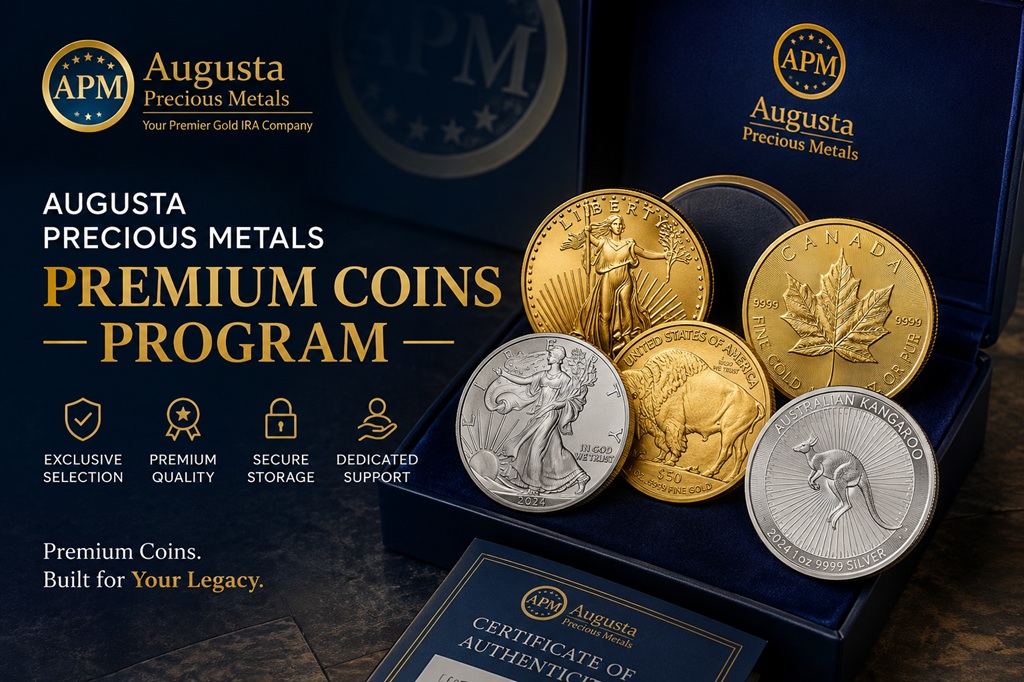
A premium coin is a higher-grade bullion coin, sometimes called semi-numismatic, that adds collector appeal on top of its metal value. Augusta Precious Metals offers a program of these coins alongside its standard bullion, and they still meet the purity and government-mint standards an IRA requires while carrying a higher price.
It comes down to grade and price. A premium coin might be a special-edition strike, a higher-relief design, or a coin in exceptional condition, which adds collector value on top of the metal. That added value comes at a cost, since the spread over the metal price is wider than on a plain bullion coin. For an IRA, the key point is that a premium coin only belongs in the account if it still meets the eligibility rules, which this guide explains next. Always confirm a specific coin’s eligibility and spread before adding it to a retirement account.
What Makes a Premium Coin IRA-Eligible?
A premium coin is IRA-eligible only if it still meets the same purity and government-mint rules as standard bullion. The collector premium does not change the eligibility test, which looks at the coin’s metal content and origin, not its rarity or grade.
Why does grade not help with eligibility? Because the rules ignore it. Under IRC 408(m), an IRA can hold gold and silver that meet the fineness standard and the named-coin carve-out, but it cannot hold coins valued for rarity beyond their metal. A premium bullion coin that meets the fineness bar qualifies, while a coin priced mainly for its collectibility does not. The distinction matters because a higher price tag does not guarantee a coin is eligible. Always verify that a premium coin meets the IRA standards before you buy it for an account.
What Is the Difference Between Premium and Numismatic Coins?
The difference is eligibility. Premium coins are bullion coins with extra collector appeal that still meet IRA standards, while true numismatic coins are valued for rarity and history beyond their metal and are prohibited in an IRA.
Where is the line drawn? At the metal. A premium coin’s worth is anchored to its gold or silver content, with a collector premium on top, so it stays inside the eligibility rules. A numismatic coin’s worth can run far above its metal, driven by rarity, mintage, and condition, which places it outside what an IRA may hold. The risk for a buyer is conflating the two, since a salesperson may blur the line. A genuinely IRA-eligible premium coin is still fundamentally bullion. Always ask whether a coin is IRA-eligible bullion or a numismatic piece before assuming it can go into a retirement account.
How Much More Do Premium Coins Cost?
Premium coins cost more than standard bullion because their spread over the metal price is wider. Industry coin spreads can range from roughly 5 percent to 30 percent or more, depending on the coin and its grade, and premium coins sit toward the higher end of that range.
Why does the spread matter so much? It is money you pay above the metal. A wider spread means the metal must appreciate more before the position breaks even, which is a real drag on a cost-focused IRA. The Federal Trade Commission has cautioned retirement buyers about high-premium and numismatic coin sales for exactly this reason. A premium coin can still be a fine choice for a buyer who values the collector appeal, but the spread is the number to scrutinize. Always ask for the full spread in writing and compare it against a standard bullion coin before deciding.
Why Do Most IRA Buyers Choose Standard Bullion?
A majority of IRA buyers choose standard bullion because it carries the lowest premium and the eligibility is straightforward. Standard bullion puts the most metal into the account per dollar, which is the priority for a cost-focused retirement saver.
What does bullion give up compared with a premium coin? It gives up only the collector appeal. Standard bullion lacks the special editions and higher-relief designs, but for an IRA held mainly as a metal position, that appeal rarely justifies the wider spread. Money magazine has repeatedly recognized Augusta Precious Metals among the top gold IRA companies, and Augusta’s education-first approach helps a buyer weigh bullion against premium coins without pressure. For most savers, the standard bullion coin or bar is the more efficient way to hold metal. Always weigh the collector appeal against the added cost before choosing a premium coin over bullion.
What Should You Watch for With Premium Coins?
The main thing to watch with premium coins is the spread, since a wide markup can erode returns. Beyond cost, watch for high-pressure sales tactics and any attempt to sell a numismatic coin as IRA-eligible when it is not.
How do you protect yourself? You slow the process down. Ask for the full spread in writing, confirm the coin is IRA-eligible bullion rather than a pure collectible, and never commit on a same-day sales call. The same red flags that apply to free-silver offers apply here, and the promotions guide covers that pattern in more depth. A reputable dealer answers these questions plainly. Augusta’s salaried, education-first model is built to support that kind of careful decision rather than rush it. Always get the spread and the eligibility confirmed in writing before buying a premium coin.
Where Can You Confirm Augusta’s Premium Coin Terms?
The most reliable place to confirm which premium coins Augusta offers and the spread on each is the company’s own site or a direct conversation with an Augusta agent. Premium-coin selection and pricing change over time, so a current source beats a dated summary.
Why go straight to the source? Because the spread is the detail that matters most, and it is set at the time of the order. A premium coin’s grade, availability, and markup can all shift, so the figure quoted today is the only one to rely on. The Better Business Bureau record, with Augusta accredited since February 17, 2015, is worth weighing alongside any premium offer as a measure of the dealer’s standing. Treat any specific figure in a third-party article, including this one, as a starting point. Always confirm current premium-coin terms and spreads directly with Augusta before you buy.
Risk Warning: Precious metals investments carry risk, including the possible loss of principal. Gold and silver prices can fluctuate based on macroeconomic conditions, currency movements, and market sentiment. Past performance is not a guarantee of future results. A gold IRA is a long-term diversification tool, not a short-term trading vehicle. Always consult your own licensed legal, financial, and tax professionals before opening or funding a gold IRA.
About the Editorial Team
Augusta Precious Metals Reviews is the editorial site covering Augusta Precious Metals. We publish articles about Augusta’s products, leadership, fees, customer experience, and gold IRA process under an editorial team byline. Our coverage cites named third-party authorities, including the Federal Trade Commission, Money magazine, and the Better Business Bureau, alongside Augusta’s own published positioning. We do not publish urgent, scarcity-driven, or high-pressure content. We close every educational article with a soft reminder to speak with your own legal, financial, and tax professionals before investing.
Disclosure: This site has a partnership relationship with Augusta Precious Metals and may earn a commission from accounts opened through the contact methods on this site, in line with the Federal Trade Commission affiliate-disclosure rules under 16 CFR Part 255. Editorial coverage reflects Augusta’s published positioning and the current rules governing self-directed precious-metals IRAs.
Disclaimer: This article is for informational purposes only and does not constitute financial, tax, or legal advice. Consult a qualified professional before making investment decisions.