Augusta Precious Metals Gold Bars: IRA-Approved Sizes and Refiners
Overall rating: 4.6 out of 5
TL;DR: Gold bars are the most cost-efficient way to hold IRA gold by weight, since they carry the lowest premium of any gold product. Augusta Precious Metals sells IRA-approved bars from accredited refiners, eligible once they meet the 99.5 percent purity standard. Bars trade a little resale flexibility for that lower cost, and each one ships with an assay card and serial number.
| IRA-Approved Gold Bars | |
| **Best for** | IRA buyers who want the most gold per dollar |
| **Metal content** | At least 99.5 percent pure gold |
| **Source** | Approved or accredited refiners |
| **IRA eligibility** | Eligible by fineness under IRC 408(m)(3) |
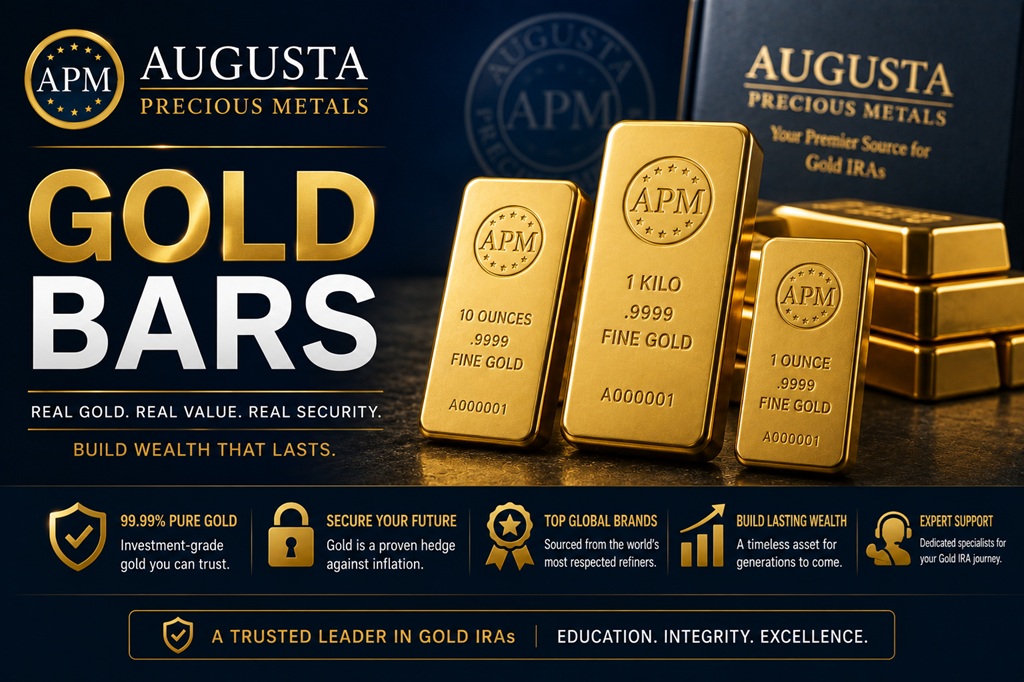
| **Sizes** | One ounce to one kilogram |
Pros:
- The lowest premium over spot of any IRA gold product
- A wide range of sizes, from a one-ounce bar to a one-kilogram bar
- IRA-eligible at 99.5 percent purity from an approved refiner
- Each bar ships with an assay card and serial number for authentication
Cons:
- Less divisible at resale than coins, since a large bar sells as a whole
- Not legal tender, and slightly less universally recognized than a sovereign coin
- Refiner accreditation matters, so a bar's provenance must check out
What Are IRA-Approved Gold Bars?
An IRA-approved gold bar is refined gold pressed or cast into a rectangular ingot and stamped with its weight, its purity, and the mark of the refiner that made it. Unlike a coin, a bar carries no design premium, so a buyer pays almost entirely for the metal.
It comes down to cost and form. Augusta Precious Metals sells IRA-eligible gold bars alongside its coin lineup, and the bar is simply the most direct way to own investment gold by weight. There is no sovereign design, no collectible angle, and no annually changing artwork, just stamped metal of a stated purity. That simplicity is the whole appeal for a cost-focused buyer. A bar puts the maximum amount of gold into the account per dollar spent, which is why bars anchor many larger allocations. Always confirm current bar availability with the dealer before planning a purchase.
How Gold Bars Qualify for an IRA
Gold bars qualify for an IRA on fineness, the same metal-purity test that governs bullion. Under IRC 408(m)(3), a gold bar must meet the minimum fineness a regulated futures market requires, which in practice means at least 99.5 percent pure gold.
Where does the approved-refiner rule come from? The futures market. The statute ties the fineness bar to the delivery standard set under section 5 of the Commodity Exchange Act, so an eligible bar must come from an approved or accredited refiner, assayer, or national mint, the kind whose bars are deliverable against a futures contract. A coin like the American Gold Eagle reaches eligibility a different way, by statutory name, but a bar earns it purely through refiner accreditation and purity. For a buyer, the practical rule is simple. Stick to bars Augusta lists as IRA-eligible, because those already clear the refiner and fineness tests. Always confirm a bar's eligibility with the dealer and your tax professional before buying.
Gold Bar Sizes and Authentication
Augusta offers IRA-eligible gold bars across a range of sizes, from a one-ounce bar up to larger ten-ounce and one-kilogram bars. The size you choose comes down to budget and how much gold you want in a single piece.
How do you know a bar is genuine? Its paperwork and its markings. An IRA-eligible bar ships with an assay card and a unique serial number that record its exact weight and purity, and the depository checks both when it receives and logs the bar. The bar itself is stamped with the refiner's name, the weight, and the fineness, so its identity travels with the metal. That documentation is part of why bars move cleanly through an IRA, since the custodian and depository can verify each piece. A larger bar concentrates more gold in one unit, which lowers the premium per ounce but makes the holding less divisible later. Always keep the assay documentation with the account records.
Why Gold Bars Carry the Lowest Premium
Gold bars carry the lowest premium over the spot price of any IRA gold product, and the reason is simple. There is no coin design, no collectible value, and no minting artistry to pay for, so the price tracks the metal more closely than a coin's does.
How much does that save a buyer? It varies, but the gap is real. A coin's premium covers its design, its legal-tender status, and its collectibility, while a bar's premium mostly covers refining and distribution. For a buyer focused on maximum gold per dollar, that makes bars the efficient core of a position. The premium still moves with the market and with bar size, so the smallest bars cost a bit more per ounce than the largest. Augusta prices the bar premium and buyback spread when you place the order, so only that day's quote really applies. A full account-fee breakdown sits on the pricing page, separate from this product review. Always confirm the current bar premium and buyback terms with Augusta before buying.
Buying IRA Gold Bars Through Augusta Precious Metals
Augusta Precious Metals handles a bar purchase as the dealer, while a separate IRS-approved custodian operates the retirement account. The metal does not go to the buyer. It ships to an approved depository, where it is recorded under the account holder's name and account number.
Why route a bar through a vault instead of taking it home? The tax rules require it. Personal possession of IRA metal would collapse the account's tax treatment, so the depository step is mandatory. Augusta sources and prices the bar, the depository stores and insures it, and the custodian keeps the records and files the yearly forms. The dealer behind the bar is worth checking too. Money magazine has repeatedly ranked Augusta Precious Metals among the top gold IRA companies, including Best Overall recognition across 2022 through 2025, and the firm holds an A+ from the Better Business Bureau, accredited since February 17, 2015. Those are signals about the seller, not the metal. Always confirm storage and custodian details with Augusta before opening an account.
Gold Bars vs Gold Coins for an IRA
Gold bars and gold coins both hold IRA-eligible gold, but they suit different priorities. Bars win on cost, while coins win on flexibility and recognition, and the right choice depends on how a buyer plans to hold and eventually sell.
Which one fits a given account? It depends on the goal. A bar delivers the most metal per dollar and anchors a larger position efficiently, but a large bar must be sold whole, which limits how finely a holder can draw the position down later. Coins cost a bit more per ounce, yet their smaller units, legal-tender status, and broad recognition make them easier to sell piecemeal. A lot of IRA holders blend the two, using bars for the bulk of the metal and coins for divisibility. For a cost-first buyer, bars are the natural core, and a few coins add flexibility at the edges. Always match the format to your own plan and a tax professional's guidance.
Frequently Asked Questions
What Makes a Gold Bar IRA-Eligible?
A gold bar is IRA-eligible when it is at least 99.5 percent pure and comes from an approved or accredited refiner, assayer, or national mint. The purity standard traces to the contract-market fineness referenced in IRC 408(m)(3), and the refiner requirement ensures the bar would be deliverable on a regulated futures market. Augusta lists the bars that meet both tests.
What Sizes Do IRA Gold Bars Come In?
IRA gold bars come in a range of sizes, from a one-ounce bar up to ten-ounce and one-kilogram bars. The smaller bars cost a little more per ounce of gold, while the larger bars lower the premium but are less divisible at resale. The one-ounce and ten-ounce sizes are common starting points for an IRA.
Why Do Some IRA Buyers Prefer Bars to Coins?
Bars appeal to cost-first IRA buyers because they offer the most gold per dollar, with the lowest premium over spot. A bar suits an investor who wants to anchor a large position efficiently. Coins still hold an edge in divisibility and recognition, so many holders blend both, using bars for the bulk and coins for flexibility.
How Is a Gold Bar Authenticated?
A gold bar is authenticated through its assay card, its serial number, and the refiner's stamp. The assay card certifies the bar's weight and purity, the serial number ties the bar to that certificate, and the depository verifies both when the bar arrives. Together they let the custodian and depository confirm each bar without destructive testing.
Risk Warning: Precious metals investments carry risk, including the possible loss of principal. Gold and silver prices can fluctuate based on macroeconomic conditions, currency movements, and market sentiment. Past performance is not a guarantee of future results. A gold IRA is a long-term diversification tool, not a short-term trading vehicle. Always consult your own licensed legal, financial, and tax professionals before opening or funding a gold IRA.
About the Editorial Team
Augusta Precious Metals Reviews is the editorial site covering Augusta Precious Metals. We publish articles about Augusta's products, leadership, fees, customer experience, and gold IRA process under an editorial team byline. Our coverage cites named third-party authorities, including the Commodity Exchange Act, Money magazine, and the Better Business Bureau, alongside Augusta's own published positioning. We do not publish urgent, scarcity-driven, or high-pressure content. We close every educational article with a soft reminder to speak with your own legal, financial, and tax professionals before investing.
Disclosure: This site has a partnership relationship with Augusta Precious Metals and may earn a commission from accounts opened through the contact methods on this site, in line with the Federal Trade Commission affiliate-disclosure rules under 16 CFR Part 255. Editorial coverage reflects Augusta's published positioning and the current rules governing self-directed precious-metals IRAs.
Disclaimer: This article is for informational purposes only and does not constitute financial, tax, or legal advice. Consult a qualified professional before making investment decisions.