Augusta Precious Metals Austrian Philharmonic Gold Coins: European Mint Heritage
Overall rating: 4.7 out of 5
TL;DR: The Austrian Gold Philharmonic is a 24-karat, .9999 fine coin from the Austrian Mint, and it is the only major bullion coin built around a musical theme, the Vienna Philharmonic orchestra. It has long ranked among Europe's best-selling gold coins, partly for its relatively tight premiums. Augusta sells the Philharmonic for IRAs in five sizes, with the metal held at an approved depository.
| Austrian Gold Philharmonic | |
| **Best for** | IRA buyers who want a pure European gold coin |
| **Metal content** | 24-karat gold, .9999 fine |
| **Mint** | Austrian Mint |
| **IRA eligibility** | Eligible by fineness under IRC 408(m)(3) |
| **Sizes** | One ounce to one-twentyfifth ounce |
Pros:
- 24-karat, .9999 fine, 99.99 percent pure gold
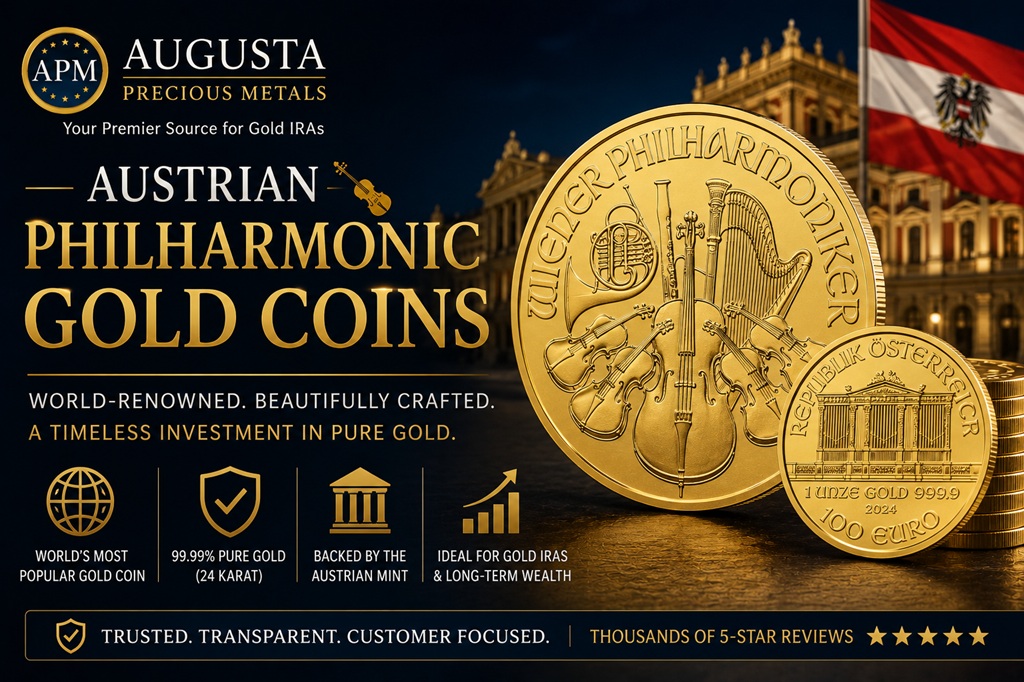
- A distinctive design honoring the Vienna Philharmonic orchestra, with the Golden Hall organ
- Ranked for years among Europe's best-selling gold coins, with relatively tight premiums
- IRA-eligible by fineness, struck by a respected government mint
Cons:
- Pure 24-karat gold is soft and marks more easily than an alloyed coin
- The euro face value is nominal and unrelated to the coin's gold value
- Like any bullion coin, it trades at a premium over the spot price
Austrian Gold Philharmonic Overview
The Austrian Gold Philharmonic is the Austrian Mint's flagship gold coin, first issued in 1989, and it carries a theme no other major bullion coin shares. The design honors the Vienna Philharmonic orchestra, which gives the coin a cultural identity beyond its gold content.
It comes down to trust and tradition. The coin holds .9999 fine gold and comes from a mint with centuries of history, a combination that built strong demand across Europe and beyond. For years the Philharmonic was the continent's top-selling gold coin, and that scale supports its liquidity today. For a retirement saver, popularity is practical. A coin with deep market familiarity is straightforward to value and resell, and the Philharmonic's standing in Europe gives it a wide pool of future buyers. Always confirm current availability with the dealer before planning a purchase.
The Vienna Philharmonic Design
The Austrian Gold Philharmonic's design is its calling card, and it celebrates the Vienna Philharmonic orchestra on both faces. The obverse shows the great pipe organ of the Golden Hall in the Vienna Musikverein, the hall behind the orchestra's famous New Year concerts, while the reverse gathers eight orchestral instruments.
Why does the design matter beyond its looks? It tells you something. The instruments on the reverse, four violins and a cello in front with a horn, a bassoon, and a harp behind, are rendered in fine relief that doubles as a craftsmanship signal. The Australian Kangaroo changes its reverse every year, but the Philharmonic keeps the same artwork and updates only the year of issue. That consistency appeals to buyers who want a recognizable, unchanging coin rather than a yearly novelty. For an IRA, the design is a point of character, not value, because the coin's worth rests on its gold. A buyer drawn to the music theme gets a distinctive coin without paying a numismatic markup. Always weigh aesthetic appeal separately from gold content when you buy.
How the Austrian Gold Philharmonic Qualifies for an IRA
The Austrian Gold Philharmonic earns its IRA eligibility through purity, the same route every pure bullion coin takes. At .9999 fine, it sits comfortably above the 99.5 percent fineness floor that gold must meet for a self-directed retirement account.
What about the euro face value? It changes nothing. The fineness path under IRC 408(m)(3) approves gold bullion at or above 99.5 percent purity, and it looks at the metal rather than the coin's currency or country, so the euro stamped on a Philharmonic is purely nominal. The coin qualifies on the same basis as other high-purity foreign bullion that clears the bar. For a buyer who wondered whether a European coin could go in an American account, the answer is a clean yes. The wider self-directed IRA rules sit on the Augusta gold IRA overview, so this review stays with the coin. Always confirm eligibility details with your own tax professional before buying.
Austrian Gold Philharmonic Specifications and Sizes
Struck in 24-karat gold to a .9999 standard, or 99.99 percent purity, the Austrian Gold Philharmonic comes from the Austrian Mint in five distinct sizes. The range runs from a one-ounce coin down to a tiny one-twentyfifth ounce, with the one-half, one-quarter, and one-tenth ounce sizes in between.
What should a buyer know about handling it? Pure gold is delicate. Because the Philharmonic is 24-karat, the metal is soft and shows marks more readily than an alloyed coin, so the coin is best left untouched in its packaging. The one-ounce coin carries a nominal face value of 100 euros, a legal-tender formality unrelated to its real gold value, and a reeded edge that helps confirm authenticity. Smaller sizes cost more per ounce of gold, the usual trade-off for fractional convenience. For most IRA buyers, the one-ounce coin offers the best mix of low premium and easy resale. Always confirm which sizes Augusta currently stocks before planning an allocation.
Buying the Austrian Gold Philharmonic Through Augusta Precious Metals
Augusta Precious Metals keeps the Austrian Gold Philharmonic on its list of IRA-eligible gold coins, taking the dealer role on each sale while an IRS-approved custodian runs the account itself. The law requires that separation for a self-directed IRA.
Where does the coin live after purchase? Inside a depository. A completed order sends the Philharmonic to an approved vault, such as the Delaware Depository, where it is held in the account holder's name and account number. The tax rules forbid keeping IRA metal at home, so the vaulting step is built into every compliant purchase. Augusta arranges the sourcing and pricing, the depository provides the storage, and the custodian maintains the records and tax filings. Who sells you the coin belongs in the calculation as well. Money magazine gave Augusta Precious Metals its Best Overall Gold IRA Company title every year from 2022 through 2025, then named it Best for Educational Resources for 2026. Those honors describe the company, not the coin. Always confirm storage and custodian details with Augusta before opening an account.
Austrian Gold Philharmonic Premiums and Costs
Every gold bullion coin trades at a premium over the spot price, and the Austrian Gold Philharmonic is often praised for keeping that premium relatively tight among European coins. The markup still covers minting and distribution, so the price always sits above the raw metal value.
Which version is the most economical? The standard bullion coin. A proof Philharmonic, struck for collectors, costs more, and the smallest fractional sizes carry the highest premium per ounce, so the one-ounce bullion strike is the usual IRA choice. Premiums rise with demand and tighten with supply, which means today's figure may not hold next week. Since Augusta quotes the premium and the buyback spread at the time of the order, the live number is the one that counts. A full breakdown of account fees and other costs sits on the pricing page, kept out of this coin review on purpose. The prudent step is to lock down the premium and the buyback figure in writing before the order goes through. Always confirm current premium and buyback terms with Augusta before you purchase.
Frequently Asked Questions
Why Does the Austrian Gold Philharmonic Feature Orchestral Instruments?
The Austrian Gold Philharmonic features orchestral instruments because its design honors the Vienna Philharmonic orchestra, one of the world's most celebrated. The reverse shows eight instruments, four violins and a cello with a horn, a bassoon, and a harp, while the obverse depicts the Golden Hall pipe organ. The music theme gives the coin a cultural identity that sets it apart from other bullion.
How Can a Euro-Denominated Coin Go in a United States IRA?
A euro-denominated coin can go in a United States IRA whenever it meets the IRS fineness standard, and the Austrian Gold Philharmonic does. The euro stamped on the coin is just a legal-tender label, and IRC 408(m)(3) ignores it entirely, judging eligibility on the .9999 gold purity, which sails past the 99.5 percent threshold. The country of origin and the currency simply do not enter into it.
What Sizes Does the Austrian Gold Philharmonic Come In?
Five sizes are available, from the one-ounce coin down through the one-half, one-quarter, and one-tenth ounce to a small one-twentyfifth ounce. For an IRA, the one-ounce coin is the usual pick, since its premium per ounce runs the lowest. The fractional pieces let a buyer add gold in smaller steps, though they cost more per ounce.
Why Is the Philharmonic So Popular in Europe?
The Philharmonic is popular in Europe because it combines a respected national mint, a culturally resonant design, and relatively tight premiums. For years it ranked as the continent's best-selling gold coin, which built deep familiarity among European buyers and dealers. That popularity supports the coin's liquidity, making it straightforward to buy and sell across the region and beyond.
Risk Warning: Precious metals investments carry risk, including the possible loss of principal. Gold and silver prices can fluctuate based on macroeconomic conditions, currency movements, and market sentiment. Past performance is not a guarantee of future results. A gold IRA is a long-term diversification tool, not a short-term trading vehicle. Always consult your own licensed legal, financial, and tax professionals before opening or funding a gold IRA.
About the Editorial Team
Augusta Precious Metals Reviews is the editorial site covering Augusta Precious Metals. We publish articles about Augusta's products, leadership, fees, customer experience, and gold IRA process under an editorial team byline. Our coverage cites named third-party authorities, including the Austrian Mint and Money magazine, alongside Augusta's own published positioning. We do not publish urgent, scarcity-driven, or high-pressure content. We close every educational article with a soft reminder to speak with your own legal, financial, and tax professionals before investing.
Disclosure: This site has a partnership relationship with Augusta Precious Metals and may earn a commission from accounts opened through the contact methods on this site, in line with the Federal Trade Commission affiliate-disclosure rules under 16 CFR Part 255. Editorial coverage reflects Augusta's published positioning and the current rules governing self-directed precious-metals IRAs.
Disclaimer: This article is for informational purposes only and does not constitute financial, tax, or legal advice. Consult a qualified professional before making investment decisions.